Many people in Visakhapatnam seek dermatology care for common skin growths such as warts, skin tags, and other benign lesions. These conditions are usually harmless but may cause discomfort, cosmetic concern, or repeated irritation. Dermatology clinics use several treatment methods to remove these lesions safely. Two commonly used techniques are cryotherapy and radiofrequency (RF) ablation, and understanding the differences can help patients choose the most appropriate option.
What Are Benign Skin Lesions?
Benign skin lesions are non-cancerous growths that commonly appear on the skin. Examples include warts, skin tags, seborrhoeic keratoses, and certain types of benign moles. These lesions can develop due to viral infections, friction, age-related skin changes, or genetic tendencies.
While many lesions are medically harmless, patients often choose removal when the lesion becomes painful, bleeds, catches on clothing, or affects appearance.
Causes and Triggers
Several factors can contribute to benign skin growths:
- Human papillomavirus (HPV) infections causing warts
- Skin friction in areas such as the neck, underarms, and groin leading to skin tags
- Genetic predisposition to certain growths
- Age-related skin changes
- Environmental factors such as humidity and sweating common in coastal regions like Vizag
A dermatology consultation helps determine whether the lesion is benign and what treatment is appropriate.
How It Is Diagnosed
Diagnosis usually involves a clinical skin examination by a dermatologist. The doctor evaluates:
- the appearance of the lesion
- its location and growth pattern
- whether similar lesions are present elsewhere
In uncertain cases, a dermatoscopic examination or biopsy may be recommended. This ensures that lesions resembling benign growths are not early skin cancers.
Treatment Options
Treatment depends on the type of lesion, its location, and the patient’s skin type.
Cryotherapy
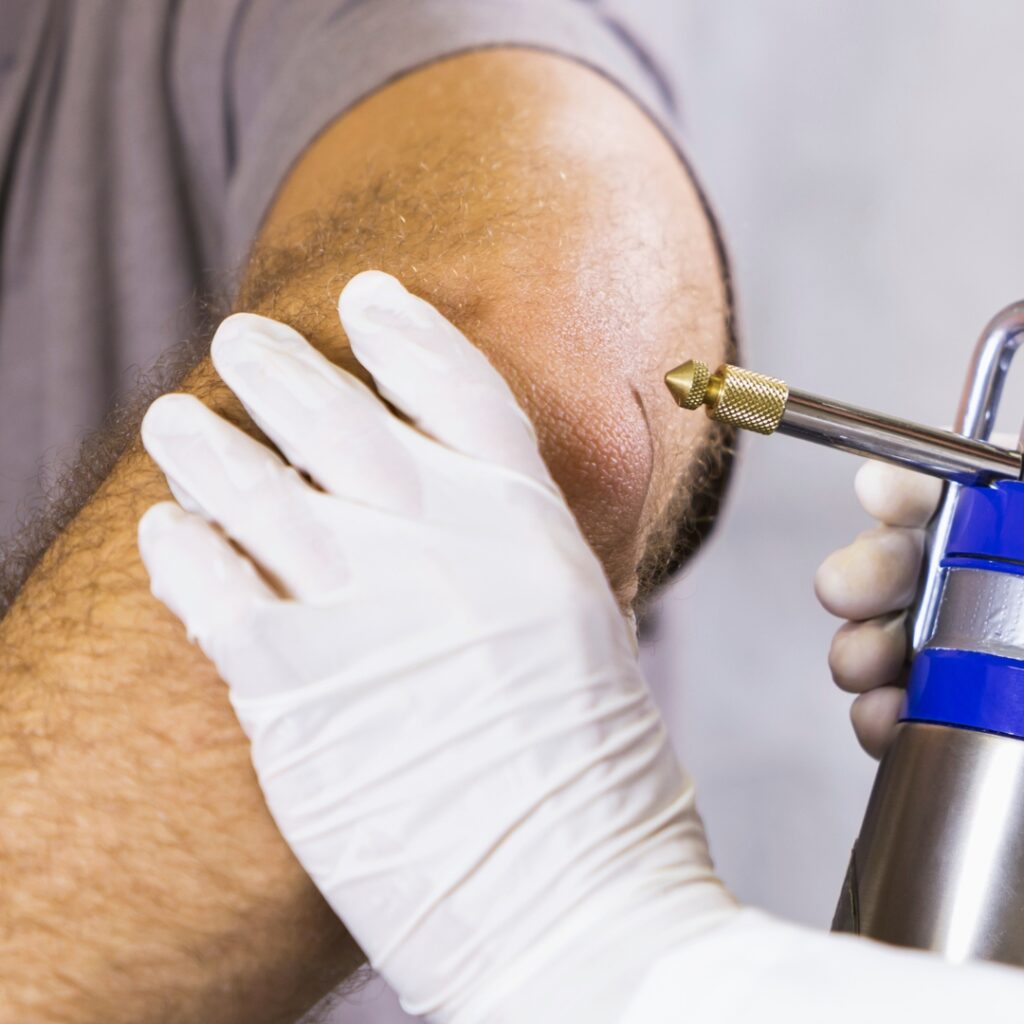
Cryotherapy removes lesions by freezing the tissue using liquid nitrogen. The intense cold destroys the abnormal cells, which then blister and fall off over the following days or weeks.
Cryotherapy is widely used because it is quick and requires minimal equipment. However, multiple treatment sessions may sometimes be needed for complete clearance.
Radiofrequency (RF) Ablation
RF ablation removes skin lesions using controlled electrical energy delivered through a fine surgical tip. The lesion is removed under local anaesthesia, allowing precise control over the depth and area treated.
This technique is particularly useful for:
- skin tag removal
- stubborn or recurrent warts
- genital warts
- cosmetically sensitive areas
RF ablation allows the dermatologist to remove tissue layer by layer under direct visual control, which can help minimise damage to surrounding skin.
What to Avoid
Over-the-counter chemical treatments or home remedies may lead to irritation, infection, or scarring, especially when used without proper diagnosis. Any growth that changes in colour, bleeds, or grows rapidly should always be evaluated by a dermatologist.
What to Expect
Most benign lesion removal procedures are quick outpatient treatments.
For RF ablation, a small amount of local anaesthetic is used so the procedure is usually comfortable. Patients can typically return to normal activities the same day.
Healing usually takes 7–14 days, depending on the size and location of the lesion. Your dermatologist will provide guidance on wound care and follow-up visits if needed.
Patients in Visakhapatnam and Vizag often prefer treatment approaches that minimise repeated visits while achieving good cosmetic outcomes.
Frequently Asked Questions
Is cryotherapy painful?
Cryotherapy can cause a brief burning or stinging sensation during freezing. Some patients also experience blistering or soreness for a few days after treatment.
Does RF ablation leave scars?
When performed carefully by a dermatologist, RF ablation is designed to remove the lesion precisely while preserving surrounding skin. Minor temporary marks may occur but usually fade as the skin heals.
How many sessions are needed for wart removal?
Some warts may require multiple treatments regardless of the method used. In many cases, RF ablation can clear lesions in a single sitting, while cryotherapy may sometimes require repeat sessions.
Can skin tags grow back after removal?
The removed skin tag does not return, but new skin tags may develop in other areas over time due to friction or genetic tendency.
If you are dealing with warts, skin tags, or other benign skin growths and have not found lasting relief, a structured consultation at Visakha Skin Clinic can help identify what is driving your skin concern and what treatment approach suits your skin. Book an appointment to discuss safe removal options in Visakhapatnam.