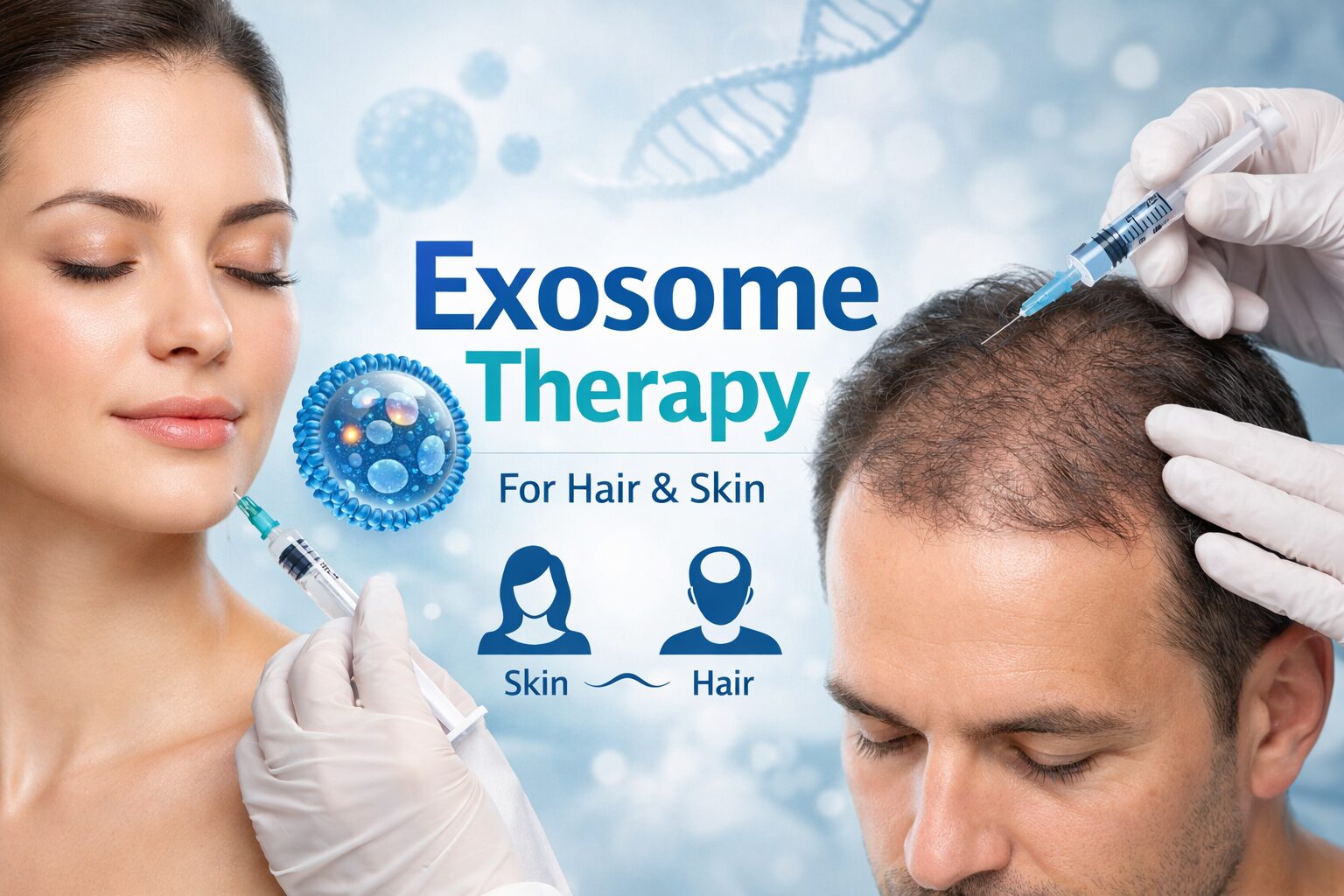
Many patients in Visakhapatnam are now hearing about exosome therapy for skin rejuvenation and hair loss. The treatment is increasingly offered at aesthetic clinics and hair restoration centres, often described as a regenerative or stem-cell–derived therapy.
Because exosome treatments are relatively new, patients frequently ask whether they are effective and whether they are safe. Understanding how the treatment works and how it compares with established therapies is essential before making a decision.
At Visakha Skin Clinic in Vizag, treatment recommendations are always guided by evidence, diagnosis, and realistic expectations, rather than marketing trends.
What Are Exosomes?
Exosomes are microscopic particles naturally released by cells. They measure roughly 30–150 nanometres and act as communication signals between cells.
These particles contain proteins, RNA, and other signalling molecules that help regulate processes such as:
- tissue repair
- inflammation control
- cellular regeneration
- blood vessel formation
In aesthetic medicine, exosomes are usually derived from mesenchymal stem cells (MSCs) found in tissues such as bone marrow, fat tissue, or umbilical cord tissue.
When injected into the skin or scalp, these signalling molecules are believed to stimulate repair processes in surrounding tissues.
Causes and Triggers
Patients typically seek exosome therapy in Visakhapatnam for two main concerns:
Skin ageing
Common triggers include:
- sun exposure in coastal climates such as Vizag
- collagen loss with age
- environmental pollution
- chronic inflammation in the skin
Hair thinning
The most common cause is androgenetic alopecia, also known as pattern hair loss. Contributing factors include:
- genetics
- hormonal sensitivity of hair follicles
- scalp inflammation
- reduced follicle growth cycles
Accurate diagnosis is essential because not all hair loss or skin concerns respond to regenerative therapies.
How It Is Diagnosed
Before recommending treatments such as exosome injections for hair loss or skin rejuvenation, a structured dermatological evaluation is necessary.
This typically includes:
- medical history and medication review
- scalp or skin examination
- dermoscopic assessment of hair follicles
- identification of underlying conditions such as telogen effluvium or scarring alopecia
In some cases additional investigations may be required before deciding on the most appropriate treatment.
Treatment Options
Treatment recommendations depend on the underlying diagnosis.
First-line treatments
For hair loss, the most widely supported treatments include:
- Minoxidil therapy
- Finasteride (for appropriate patients)
- Platelet-Rich Plasma (PRP) injections
- nutritional correction where deficiencies exist
For skin ageing, established options include:
- medical-grade retinoids
- energy-based treatments such as lasers or radiofrequency
- injectable wrinkle relaxers
- hyaluronic acid fillers
These treatments have been studied extensively in large clinical trials.
Second-line or emerging treatments
Exosome therapy is an emerging regenerative treatment being investigated for:
- improving skin texture
- accelerating healing after procedures
- stimulating hair follicle activity
Early clinical studies have shown improvements in hair density and skin repair in some patients. However, research is still developing and treatment protocols are not yet standardised.
What to avoid
Patients should be cautious of:
- treatments marketed with guaranteed results
- clinics unable to provide product source or safety documentation
- claims that exosomes replace established therapies
A dermatologist can help determine where regenerative treatments may fit into a broader treatment plan.
What to Expect
When exosome therapy is used, treatments are typically performed as injections into the scalp or skin.
Patients may experience:
- mild redness
- temporary swelling
- brief discomfort at injection sites
Results, when they occur, usually develop gradually over several months. Because research is still evolving, outcomes can vary between individuals.
Most patients benefit from combining regenerative treatments with well-established therapies and long-term hair or skin care plans.
Frequently Asked Questions
Are exosome treatments approved for cosmetic use?
Regulatory frameworks differ between countries. In many regions, exosome products used in aesthetic medicine are still considered emerging therapies and may not yet have full regulatory approval.
Are exosome injections better than PRP for hair loss?
Some small studies suggest comparable or potentially stronger effects, but PRP currently has a larger body of clinical research supporting its use.
How many treatments are usually required?
Protocols vary depending on the product used and the clinical indication. Many clinics recommend a series of treatments spaced several weeks apart.
Are there risks?
Short-term side effects are usually mild. However, long-term safety data is still limited, which is why careful patient selection and informed consent are important.